

How to create a single customer view

What Is a Single Customer View?
A single customer view (SCV) is the compiling and storing of all your customers’ data in a single platform or database. A single customer view can contain a range of information, including:
Contact Information
Name, address, phone number, email address, social media profiles, and business name and address.
Demographic Information
Age, gender, education level, marital status, income level, employment status, job role, industry, and business size.
Digital & Behavioural Data
Contact date and method, number of contacts, involved team members, customer outcomes, resolution status, viewed pages, email opens, and sales outreach.
Sales Touch Points & Transactional Data
Order value, purchase dates, returns or cancellations, online ads, social media, marketing content, peer referrals or affiliate programs, product reviews, point of sale, and customer loyalty programs.
The Benefits of a Single Customer View
By consolidating all customer data into a single profile that provides a unified view of a customer, organisations benefit from improved decision making, enhanced customer retention, and streamlined work flows.

Additional benefits of a single customer view for businesses and organisations of all sizes include:
- Unique customer profile
- Improved resource allocation
- Improved risk assessments
- Improved service delivery
- Unique entity identification
- Enhanced marketing profiles
- Accurate analytics.
Why Build a Single Customer View?
Most large, successful businesses or organisations that exist today once started small, building around a single great idea—be it a product, service, or solution that addressed a need in the marketplace.
Small organisations naturally want to attract more customers so they can gradually—or sometimes rapidly—turn into large organisations. New divisions and departments will need to be added to deal with the increasing demands of doing more business and serving more customers. Acquisitions also form part of a growth strategy that requires the integration of customer data.
For small businesses to scale, they must inevitably become more complex—and as they grow, so does the volume of data they generate. Before long, an organisation can have multiple, separate systems, all generating large volumes of data gathered from every division and discipline, marketing activity, and customer interaction.
In such circumstances, data can easily become spread across a variety of systems, which may not necessarily be aligned or accessible. What’s more, as customer data is generated across disparate systems, they will likely develop inaccuracies or simply become outdated as time passes.
When this happens, a company’s successful foundations can start to weaken, and the customer relationships that originally brought success can disconnect. The challenge of dealing with the quality of customer data is a reality that any fast-growing business or organisation will have to face if it wants to continue to build and grow.
Building A Single Customer View
Without a process that provides the clearest, most current and complete picture of their customer base, organisations may find themselves with diminishing returns, and potentially encounter drag on the great idea that started the business journey in the first place.
A process that can deliver a clear customer picture is known as the Single Customer View (SCV). As the name suggests, it aims to establish the one source of truth about a customer, which is commonly referred to as the ‘Golden Record’.

When implemented effectively by a provider who understands the process intricately and can apply the right software tools to deliver it, a Single Customer View approach will enrich the data your company holds, resulting in better, more cost-efficient customer engagement across all departments, which ultimately leads to business success.
How to Build A Single Customer View in 5 Steps
The following are the five key steps to building an effective Single Customer View implementation process that empowers you to maximise your customer data.
Step 1: Gather your data
For any process to aim to create a single source of truth, the natural starting point is to identify and gather together your separate customer databases and decide which customer data points make sense within your business context.
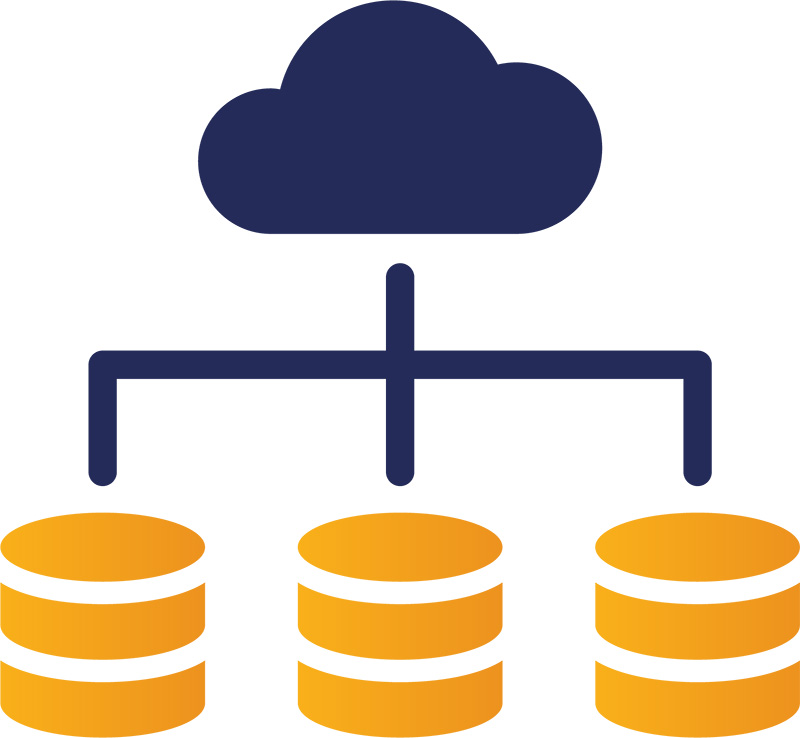
By identifying a set of data points that make sense within your business context, you will be able to address your individual organisation requirements.
Step 2: Clean your data
Whether differences occur because of changed locations, slight variations in names, or even simple typos, inconsistencies between customer databases that have become siloed within an organisation will create barriers to effective customer engagement. Hence, the aim of the second stage of a SCV implementation is to cleanse your system of its ‘dirty’ data.

By using tools that operate a systematic and finely-tuned process of validating, matching, and linking customer records, often cross-referenced with reliable external data sources, you will eliminate inaccurate and irrelevant data points across your systems and produce a dataset that is trustworthy and true for your organisation.
Step 3: Aggregate your data
Once you have a clean dataset, you will then be able to support a stable platform that allows for the identification of deeper relationships between the entities within them.
At this step in the process, you aim to find duplicate customer records that can be merged, thereby fully integrating and consolidating the data across various systems.

This will start to give you a 360-degree view of your customer’s journey within your organisation, aligning all interactions across sales, marketing and service delivery. It will also allow you to improve your data matching capabilities for the future to ensure your customer data integrity is maintained.
Step 4: Analyse your data
At this point, you will have largely achieved the single view of your customer that you were aiming for, but the process is not fully realised until you can delve into the data fully through analytics that gives insights into how well your customer relationships are working.

Most crucially, by operating from a ‘golden record’ dataset, you can be confident that the insights you gather will be based in reality. This, in turn, will help improve customer relations and retention while avoiding engagement activities that are ineffective and costly.
Step 5: Apply your data
The final step of the SCV process is where its benefits are fully realised. Where you take things from here is highly dependent on what sort of business your organisation is involved in, but you can do so with the confidence that you have the deepest understanding of your customer relationships and how you can build on that.

Applications of a Single Customer View solution will be many and varied but will be based on the truth of knowing exactly where your customers are, how to contact them, and how they usually engage with your business.
Finding the Single Customer View solution that’s right for you
Understandably, undertaking a Single Customer View process will most likely require external advice from a specialist provider with a proven track record in delivering such solutions.
IQ Office Single Customer View
When it comes to implementing an effective Single Customer View solution, there is no better framework than the one provided by Intech Solutions as part of its IQ Office platform. It is the go-to solution for some of Australasia’s largest organisations with the most complex data quality requirements.
Office IQ is trusted by Australia's and New Zealand's biggest to be the best.


Single Customer View FAQs
A Single Customer View is a unified record of a customer’s interactions, transactions, and preferences across all touchpoints, allowing businesses to understand and engage with each customer more effectively.
SCVs help businesses personalise marketing, improve customer service, reduce errors in communications, and make better data-driven decisions.
By consolidating customer data, businesses can provide relevant offers, resolve issues faster, and maintain consistent messaging across all channels.
SCVs typically include contact details, purchase history, website interactions, service requests, marketing preferences, and loyalty program activity.
Data is gathered from multiple sources such as CRM systems, e-commerce platforms, social media, call centres, in-store interactions, and email marketing tools.
SCVs enable segmentation and targeting, allowing businesses to send personalised messages and promotions based on customer behaviour and preferences.
Yes. By understanding customer behaviour and identifying signs of disengagement, businesses can proactively address issues and improve retention.
A well-managed SCV follows data protection regulations such as the Australian Privacy Principles (APPs) and includes measures to secure sensitive customer information.
Implementation can vary depending on existing systems and data quality. Many businesses use CRM platforms or specialised SCV software to integrate and clean data effectively.
Absolutely. SCVs are designed to provide a consistent view of the customer across in-store, online, mobile, and call centre interactions, ensuring seamless omnichannel experiences.
Contact Intech Solutions today for a confidential discussion about how our Single Customer View solution can deliver the customer engagement your business needs to continue growing and thriving.